Scenario‑Based Learning for Real‑World Decision Making
Designing scenario‑based learning that helps learners practice judgment in complex, real‑world situations.
Context & Problem
In many learning environments, success is measured by content completion rather than behavioral change. Learners may understand policies, processes, or frameworks, yet still struggle when faced with real situations that require judgment, trade‑offs, and context‑specific decisions.
The challenge in this case was to design learning that moved beyond information delivery and instead helped learners practice decision‑making in situations where there was no single obvious answer.
My Role & Scope
I designed a scenario‑based learning experience focused on helping learners navigate realistic situations, evaluate options, and understand the impact of their choices.
My role included:
identifying the critical decisions learners needed to practice
designing scenarios that reflected real‑world ambiguity
structuring feedback to reinforce reasoning rather than correctness
This case is presented in an anonymized, representative format to illustrate my design approach.
Instructional Approach
This learning experience was guided by several core instructional choices:
Decisions over content
The learning focused on what learners needed to decide, not what they needed to memorize.Authentic ambiguity
Scenarios reflected the nuance and constraints of real work, rather than idealized or simplified situations.Feedback as the learning moment
Feedback was designed to deepen understanding by explaining consequences and trade‑offs, not just right or wrong answers.
These principles ensured the learning felt relevant, respectful, and grounded in real practice.
Scenario Design
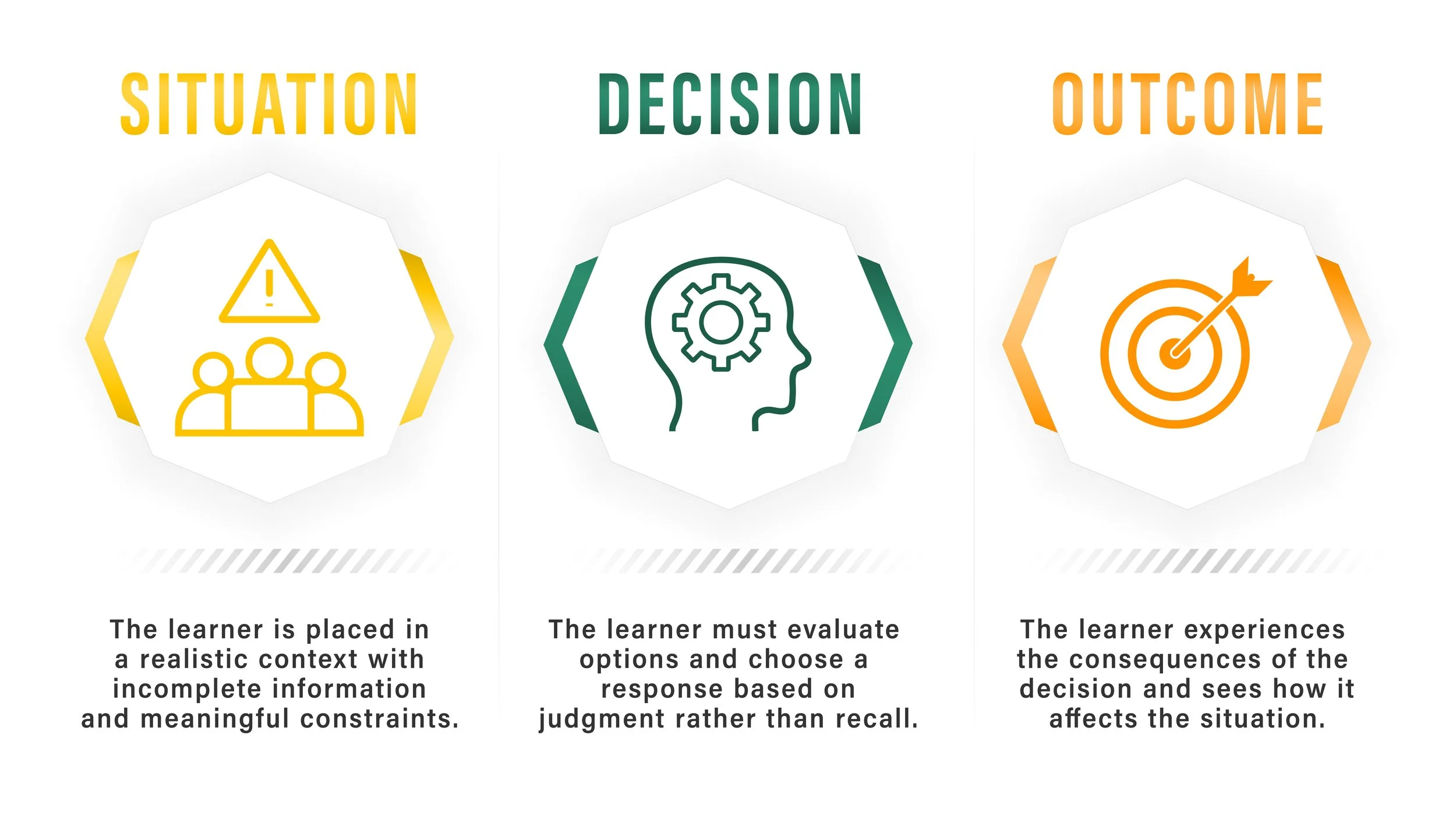
Each scenario was intentionally structured to mirror how decisions are made in real environments:
Learners were presented with a realistic situation that required judgment
Multiple response options reflected plausible choices rather than obvious distractors
Scenarios emphasized context, constraints, and downstream impact
Rather than funneling learners toward a single “correct” path, the design encouraged reflection on why certain decisions led to better outcomes in context.
Feedback & Reinforcement
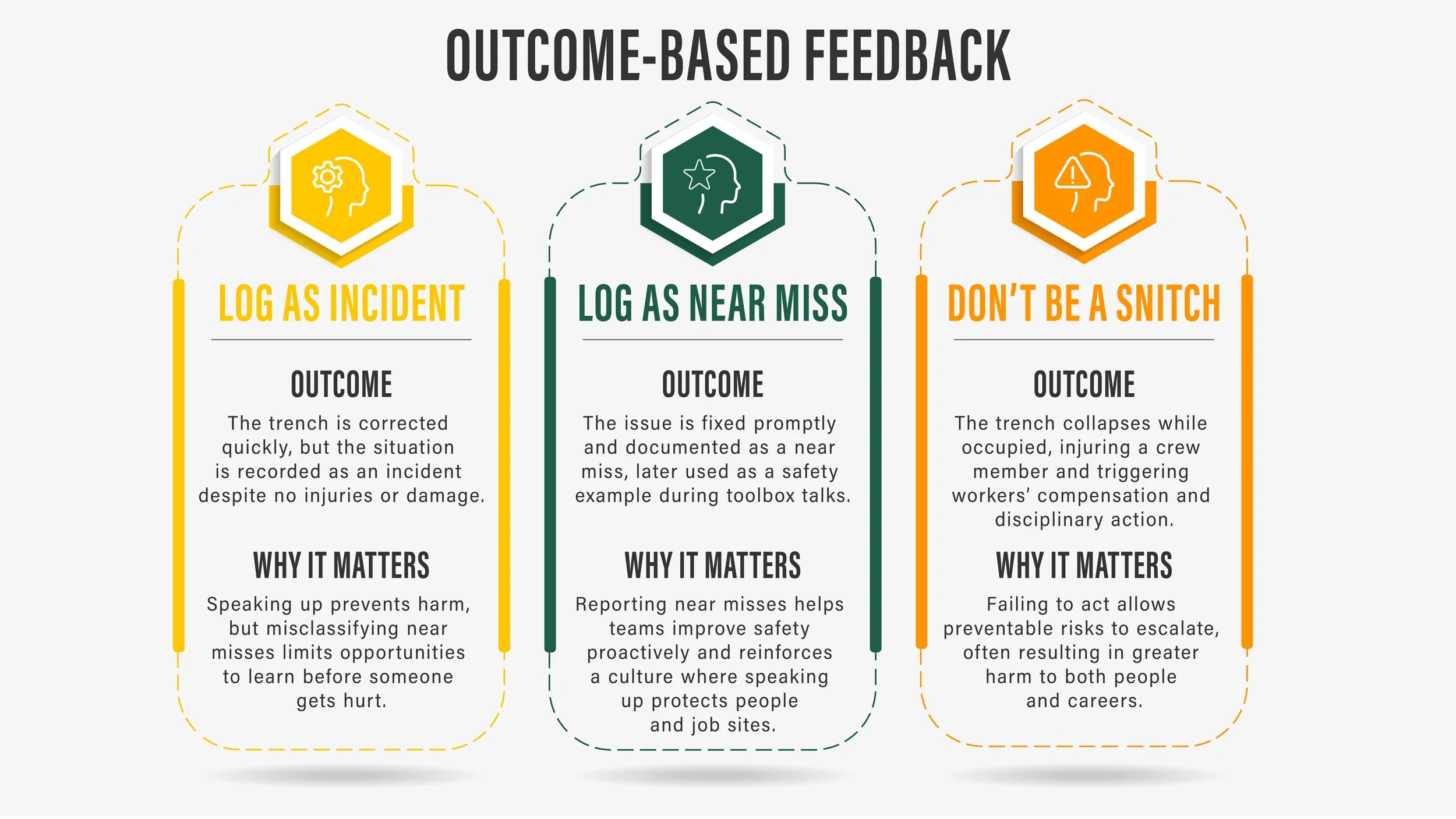
Feedback was designed as an extension of the learning, not an afterthought. Each decision triggered feedback that:
explained the impact of the choice
connected the decision to broader principles or goals
reinforced patterns learners could recognize in future situations
This approach supported deeper learning and increased the likelihood that learners would transfer insights to real work.
Outcomes & Impact
Scenario‑based learning designed in this way consistently supports:
greater learner engagement and confidence
improved decision‑making in complex situations
stronger transfer of learning to real‑world contexts
reduced reliance on trial‑and‑error in live environments
By practicing decisions in a safe space, learners are better prepared when the stakes are real.
Reflection
This work reinforced that effective learning for adults is less about delivering information and more about creating opportunities to practice judgment.
When learners are given space to make decisions, experience consequences, and reflect on outcomes, learning becomes more durable, meaningful, and applicable beyond the training itself.
Scenario‑based design remains a core part of how I approach learning problems involving complexity, risk, or ambiguity.