Manager Enablement & Leadership Development Program
Designing practical leadership development that supports managers in real, day‑to‑day people decisions.
Context & Problem
Managers are often promoted based on technical expertise, then expected to succeed without adequate support for the realities of people leadership. Traditional leadership training frequently focuses on theory or abstract models, leaving managers unprepared for the daily decisions they must make around communication, performance, and accountability.
The challenge addressed in this work was designing leadership development that felt immediately relevant, respected managers’ time, and supported them in the moments where leadership actually shows up.
My Role & Scope
I designed a manager enablement and leadership development program focused on building confidence and capability through practical application.
My role included:
defining the scope and intent of the program
designing learning experiences aligned to real managerial challenges
structuring reinforcement and support beyond formal sessions
This case is presented in an anonymized, representative format to illustrate my approach.
Design Intent
The primary intent of this program was to move leadership development away from abstract theory and toward usable judgment.
The program was designed to:
support managers in real situations they encounter daily
normalize uncertainty and decision‑making complexity
provide practical tools without oversimplifying leadership challenges
Rather than teaching “how leadership should work,” the focus was on helping managers navigate how it actually does work.
Program Structure
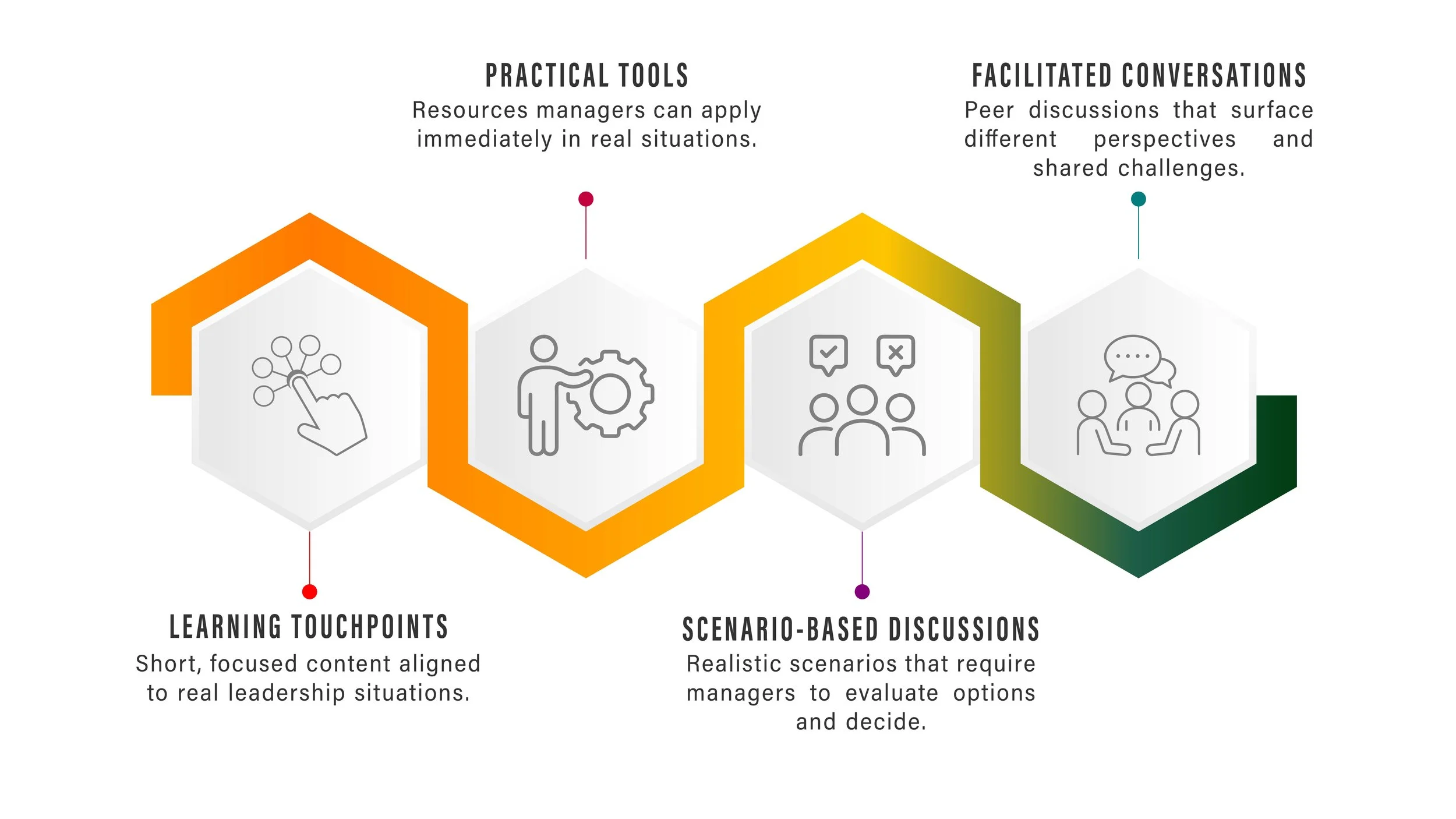
The program was designed as a blended experience, balancing learning, reflection, and application.
Key components included:
short, focused learning touchpoints
scenario‑based discussions grounded in real examples
facilitated conversations that encouraged peer learning
practical tools managers could apply immediately
This structure allowed managers to engage without stepping away from their responsibilities for extended periods.
Learning & Reinforcement Strategy
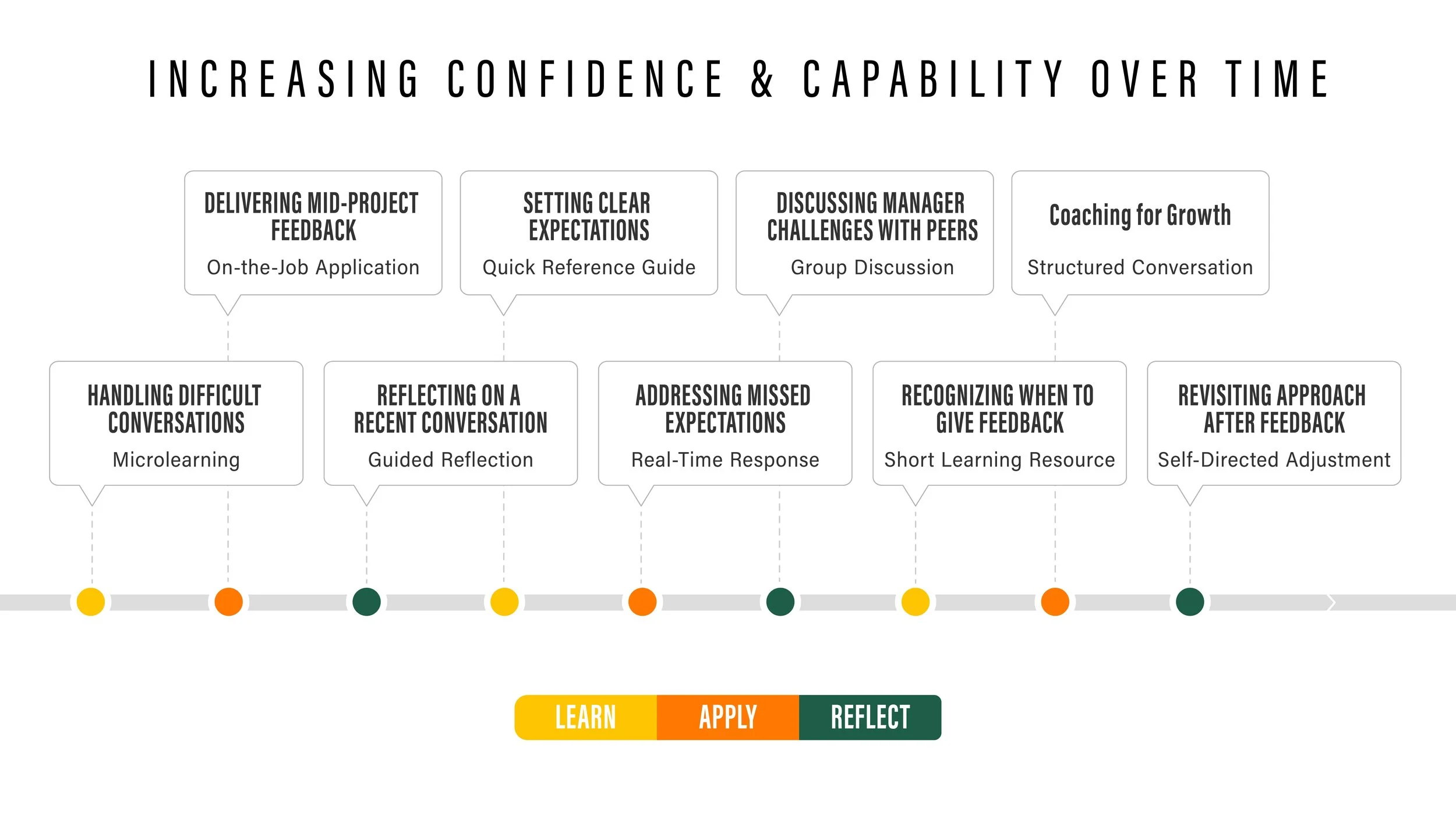
Leadership development does not happen in a single session. This program intentionally emphasized reinforcement over time.
Support strategies included:
follow‑up resources aligned to common managerial moments
reflection prompts to encourage intentional practice
opportunities for managers to share experiences and learn from one another
This approach helped leadership behaviors develop through use, not just exposure.
Measurement & Signals
Rather than relying solely on attendance or completion metrics, this program focused on signals of behavior change, such as:
increased manager confidence in handling difficult conversations
greater consistency in leadership practices across teams
improved alignment between managers and organizational expectations
qualitative feedback from participants and stakeholders
These signals provided insight into how the program was influencing real leadership behavior.
Outcomes & Impact
A practical, manager‑centered leadership program supports:
stronger manager confidence and effectiveness
more consistent employee experiences
reduced escalation of people challenges
better alignment between leadership intent and daily behavior
By focusing on real decisions and reinforcement, leadership development became a support system rather than a one‑time event.
Reflection
This work reinforced that leadership development is most effective when it is embedded in real work, not separated from it.
Managers don’t need more models—they need space to practice judgment, reflect on outcomes, and learn from experience. Designing leadership development with this reality in mind leads to more durable and meaningful growth.