Blended Customer Onboarding
Designing a scalable onboarding system that helps customers move from first use to sustained value.
Context & Problem
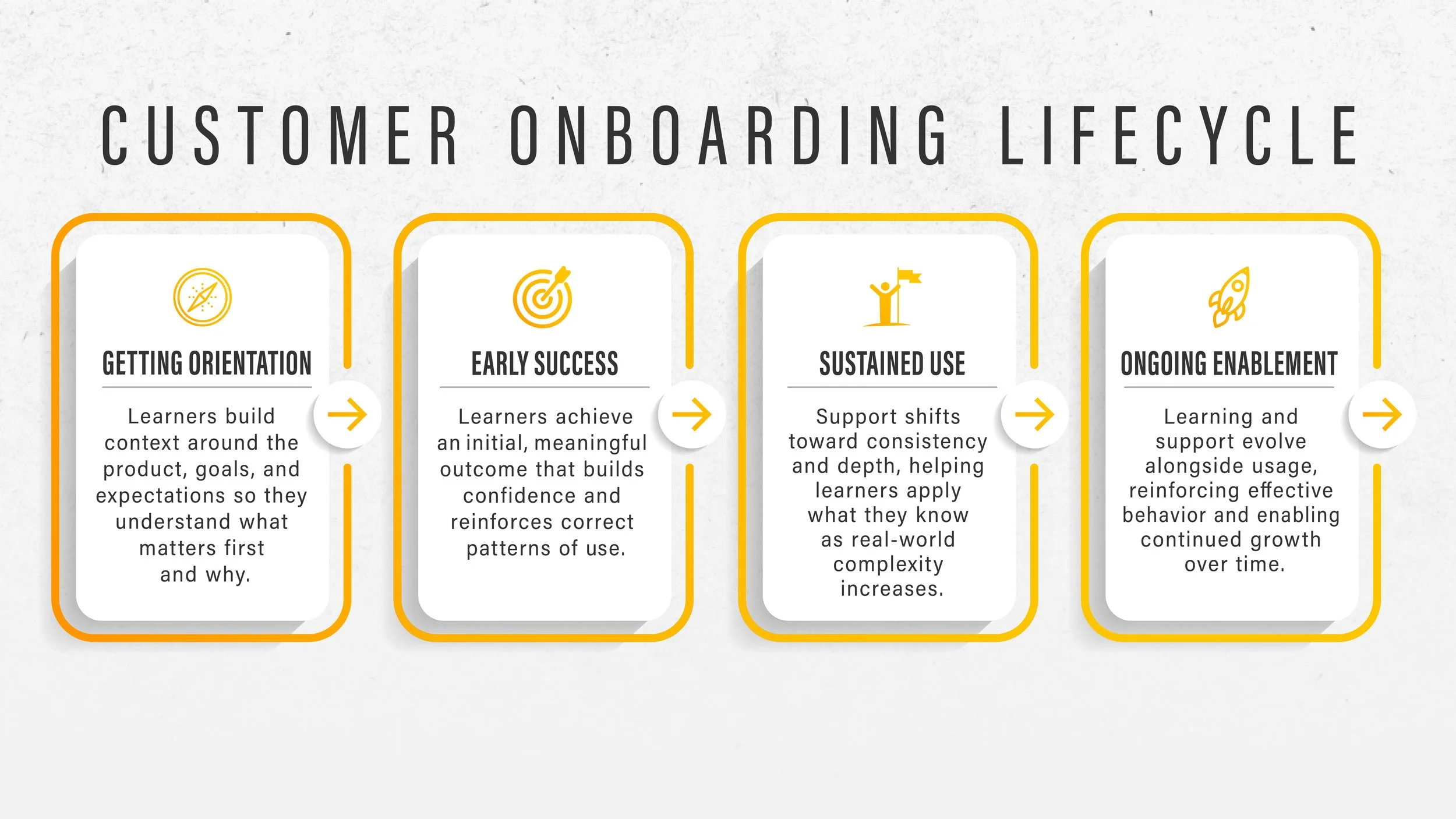
As a SaaS organization grows, customer onboarding often becomes inconsistent. New users receive information, but not always in the right order, at the right time, or in a way that supports confidence and real adoption. As product complexity increases, so does the risk that customers feel overwhelmed early in their experience.
The challenge wasn’t a lack of content—it was a lack of clarity, sequencing, and reinforcement. Customers needed an onboarding experience that focused on early wins, practical application, and ongoing support rather than one‑time training events.
My Role & Scope
I led the design of a blended customer onboarding program, owning the learning strategy, experience design, and structure of the program from end to end. My role sat at the intersection of instructional design, enablement, and customer experience, with close collaboration across Product, Customer Success, and internal stakeholders.
This case represents an anonymized, representative example of how I approach onboarding at scale.
Design Principles
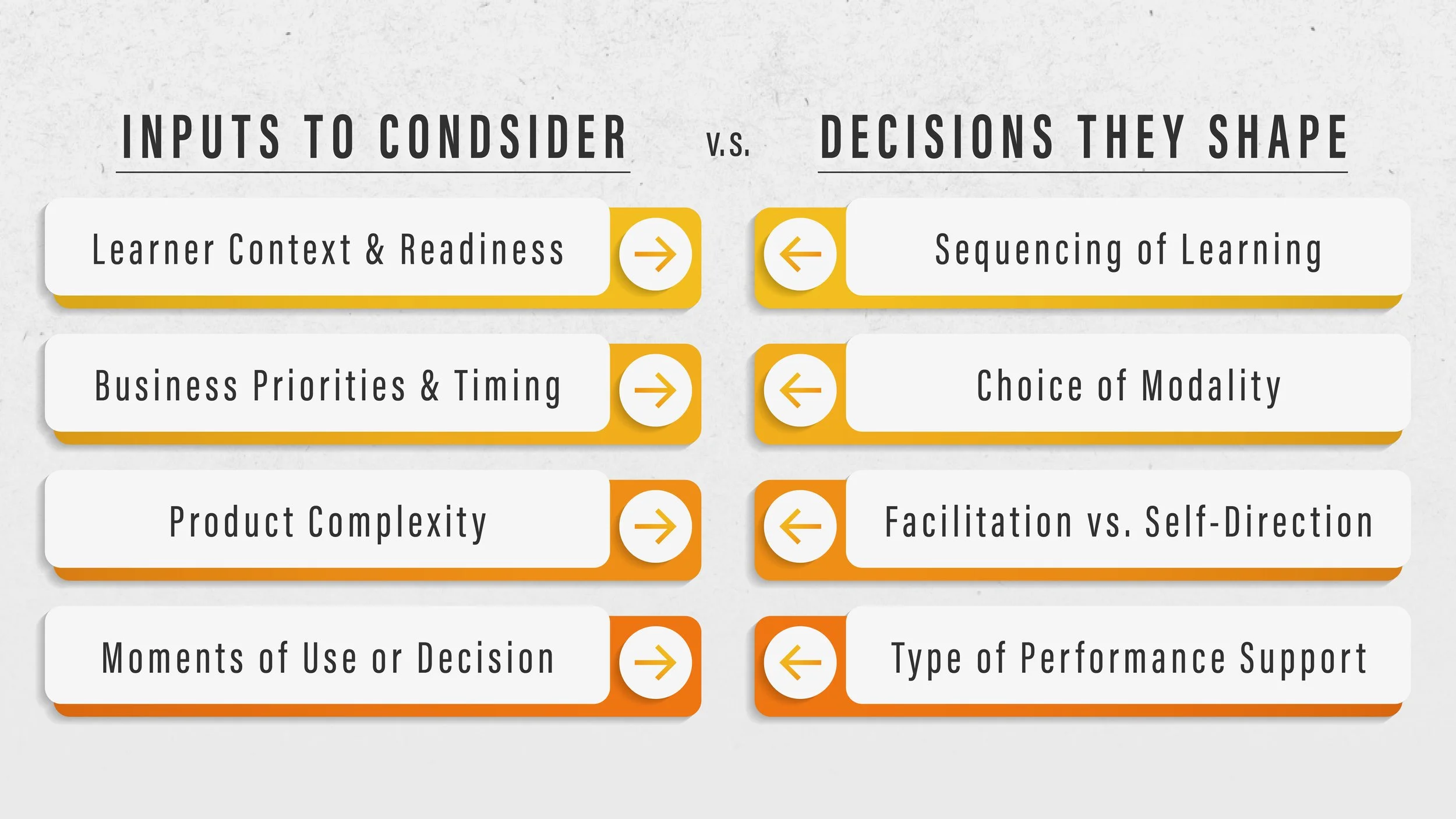
This program was guided by a few core principles that shaped every decision:
Clarity over completeness
Focus on what matters first, rather than everything a user could learn.Learning in the flow of work
Support real tasks and workflows instead of abstract knowledge transfer.Progressive disclosure
Introduce complexity gradually as confidence and context grow.
These principles helped keep the experience grounded, usable, and scalable.
The Blended Solution
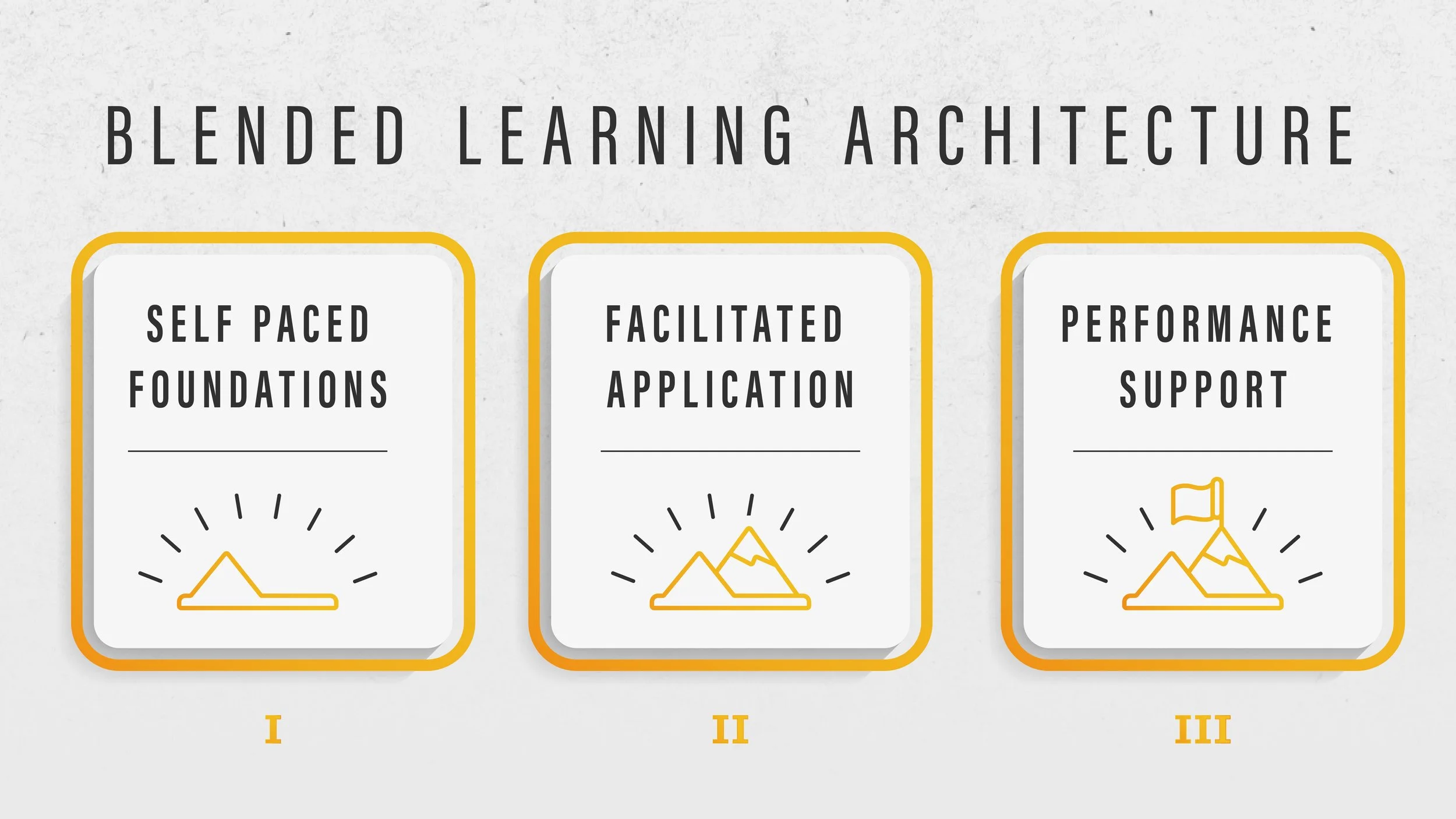
The onboarding experience was intentionally designed as a system, not a single course or event. It combined multiple modalities to support different moments in the customer journey.
Self‑Paced Foundations
Short, focused learning experiences introduced core concepts and workflows, allowing customers to engage on their own schedule while building early confidence.
Facilitated Application
Live or virtual sessions provided space to apply learning, ask contextual questions, and connect concepts directly to real use cases.
Performance Support
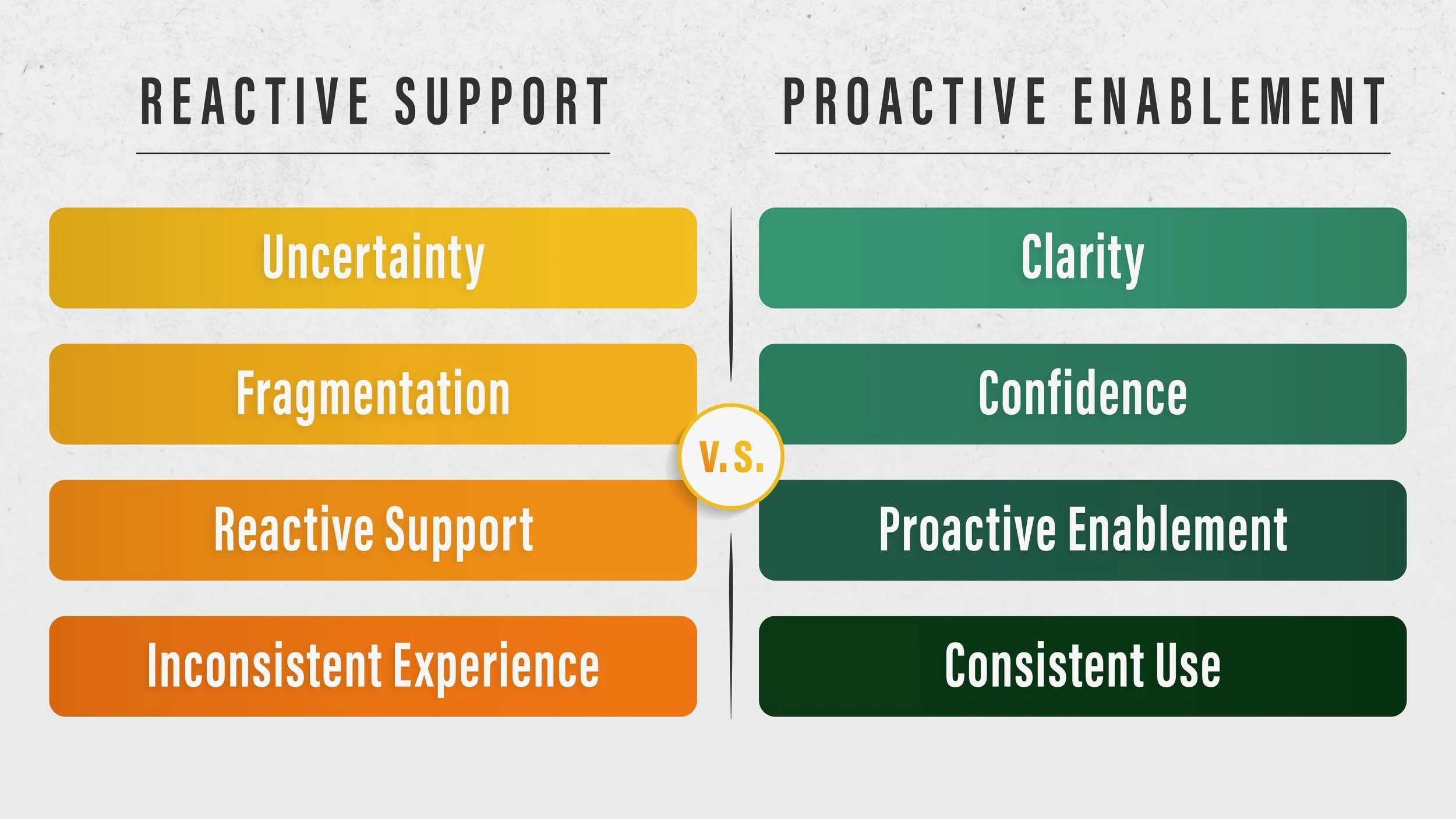
Job aids, checklists, and reference materials supported customers at the moment of need, reducing reliance on reactive support and reinforcing learning over time.
Together, these components created a cohesive onboarding journey that balanced independence with guidance.
Outcomes & Impact
While specific metrics vary by context, this approach consistently supported:
More consistent onboarding experiences across customer segments
Faster time to first meaningful use
Increased customer confidence and engagement
Reduced dependency on one‑off support and ad‑hoc training
Most importantly, onboarding shifted from a single moment to an ongoing system of support.
Reflection
This work reinforced that effective onboarding is less about teaching features and more about designing confidence. When customers understand what to focus on, feel supported as they apply learning, and know where to find help, adoption becomes a natural outcome rather than a forced one.
This system‑based approach continues to inform how I design learning, enablement, and post‑onboarding experiences today.
How This Shows Up in My Work
Whether working as an individual contributor or in a leadership role, I approach onboarding and enablement as living systems—designed to scale, adapt, and support real people doing real work. This mindset carries across learning, customer success, and organizational development initiatives.